Shopping Cart
BDSM Ropes: Safety Tips for Beginners
Publicado: 2026-02-18 14:43:13
Categorias: ,

When people ask for rope bondage advice for beginners, the answer is usually that they should go to a shibari tutorial website. While the information on the intricacies of shibari and rope suspension can be helpful for people who are more advanced in their rope journeys, this is not an accessible entry point for those just starting out. So we've put together some essential rope bondage beginner tips.
Safety when using ropes
Bondage is more dangerous than it looks. And we're not just talking about suspension. Floor work and so-called bondage in the bedroom can also pose serious risks if you don't know what you're doing. This is one of the reasons why you should never try bondage without safety scissors handy. If something goes wrong and you need to get someone off the rope immediately, this is usually a safe way to do it. Two of the biggest risks of rope bondage are loss of circulation and nerve damage. Whether you are the one tying up or the one being tied up, you must be informed about these risks.
Loss of Circulation
Circulation is often restricted during rope bondage for obvious reasons. The skin around the rope may darken, which is a normal reaction to pressure on the veins. This is usually not something to be concerned about as long as it is not sustained for more than 20 minutes. It is the responsibility of the tying person to reposition the ropes or change the position of the other person within this period to ensure that circulation is not cut off for too long. It is the responsibility of the 'tied person' to report numbness or loss of sensation.
The biggest concern regarding loss of circulation is that some of the symptoms - such as numbness or reduced sensation - mirror those of nerve damage. And nerve damage can be quite serious.
Nerve damage
The most common causes of nerve damage during rope bondage are direct or indirect pressure on the nerves and restricted blood and oxygen flow to the nerves. Symptoms of nerve damage include tingling or burning, numbness, or loss of mobility. It is important to note, however, that sometimes there are no symptoms. These are some best practices to follow to help mitigate your risk of nerve damage:
Avoid placing rope over sensitive nerve areas, including joints.
Familiarize yourself with the location of these areas by studying diagrams. The main groups of nerves exist in the arms, torso and legs - the most used body parts in rope bondage.
Limit the length of rope bondage.
The longer someone is tied up, the greater the risk tends to be. As noted above, the rope should be fully adjusted, repositioned, or removed every 20 minutes or less.
Do not tie the ropes too tightly.
Ropes should be tied tight enough to remain stable, but no tighter than that.
Be aware of rope tension and collapsing knots.
Take special precautions in situations where the ropes may loosen or tighten from accidental tension by either partner. And avoid collapsible nodes, i.e. nodes that slide and squeeze.
Use wide wraps to create more surface area and ensure tension is evenly distributed across each string in a wrap to reduce pressure.
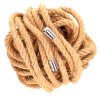
Thicker ropes (such as 8mm diameter ropes) may be safer and more comfortable. Thinner rope can be pretty and easy to tie, but it can really sink into the skin.