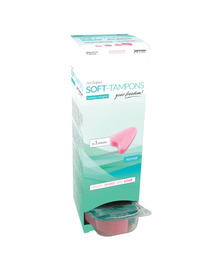
The Truths About the Menstrual Cup
Published : 2019-07-25 11:52:36 | • 3 min read
Categories : Welcome Lover Sex Shop

The journal The Lancet Public Health conducted a study showing that menstrual cups are an incredible alternative to pads and tampons and that they cause the same amount (or less) of leakage.
This study concludes that menstrual cups are safe and increasingly used by women around the world as an alternative to sanitary pads or tampons.
The research concludes that 1.9 billion women, or about 26% of the world's population, were of menstruating age in 2017, but ignorance, stigma, costs, and doubts about the safety of some products prevent girls and women from trying the full range of available products.
It was concluded that menstrual cups are just as or more effective at preventing leakage than sanitary pads or tampons. That they are safe to use for women and young girls. That purchasing them is becoming increasingly easier due to the rise in the number of companies that have started marketing these types of products in recent years. And, finally, they may also be associated with a growing concern for the environment.
Although the menstrual cup is an alternative to traditional methods, there are still many reservations regarding its use. Because of this, they remain less popular compared to sanitary pads and tampons.
This product has one part that serves to collect fluid — which instead of being a small cotton cylinder like a tampon, is a reservoir — and another part that serves for its removal from the vagina (instead of a string, it is a sort of stem).
The woman must fold the cup (it should be rolled into a small tube shape) to be able to insert it into the vagina, leaving the stem near the vaginal opening, which is then used to remove it. Once inside the vaginal canal, the cup, being flexible, will open and "stick" to the vaginal walls, creating a vacuum seal. At that moment, it will act like a cup collecting the menstrual flow. The menstrual cup has double the capacity of traditional pads and tampons.
Those with light flow can go up to a maximum of 12 hours without removing the cup.
To remove it:
- Simply pull on the stem, which should remain inside the vaginal canal as well, though accessible,
- Squeeze the base of the cup to release the vacuum effect and remove it.
- Then, just empty the flow into the toilet, clean the cup with wipes or wash it, and it will be ready to be reused.
This method does not have as much impact on the environment as pads and tampons, which are single-use, because it can be reused.
As for the material, the menstrual cup is made of hypoallergenic, medical-grade silicone. Several brands are already marketing the product in the Portuguese market, with the price around 30 euros and the cup lasting up to ten years. But our cup is much cheaper than this average and gathers the same features. For €11.99, you can already have your menstrual cup. SEE HERE.
In studies involving 507 women, menstrual cups had no negative effects on the vaginal flora (the bacteria that live inside the vagina), which can lead to infections or vaginal discharge.
The study concluded that most women from various countries who tried using the menstrual cup felt comfortable and liked using it. Of the percentage of participants in the analysis, 73% of the women and young girls said they would continue using this method after learning how to use it and trying it over several menstrual cycles.
Source: Póblico, P3, Sofia Neves